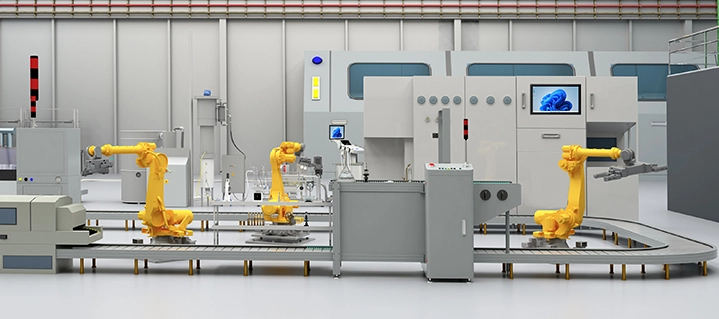
An Industrial Panel PC is an all-in-one computing solution built for demanding work environments. It integrates a powerful processor with a ruggedized touch display into a single unit.These systems serve as the central Human-Machine Interface (HMI) for modern factories. Professionals use them to manage production lines and monitor complex automation tasks.This technical overview explores the hardware architecture that ensures stable operation in harsh settings.
Features of Industrial Panel PCs
Features of Industrial Panel PCs
Operational Stability
These systems maintain peak performance during 24/7 operation.They provide long-term reliability in demanding industrial environments.
System Integration
Industrial Panel PCs support diverse communication protocols.They offer multiple I/O ports for seamless hardware connectivity.
Environmental Resistance
The rugged casing resists dust, moisture, and high-frequency vibrations. These units operate safely in wide temperature ranges.
FAQs of Industrial Panel PCs
What to do if the casing of the rugged industrial embedded computer is hot?
When the machine is charging or in continuous use, the bottom of the machine body is slightly hot. The working current of the machine is high, and the bottom shell is slightly hot, which is a normal phenomenon.
Where do professionals deploy Industrial Panel PCs?
Factories and energy plants utilize these systems for real-time data visualization. They also control automated assembly lines and smart city infrastructure.
How do Industrial Panel PCs differ from standard monitors?
Panel PCs house a complete computer system inside the display frame. They offer much higher durability and longer lifecycles than consumer monitors.
Can these systems bridge modern software with legacy equipment?
Yes. These units often feature specialized ports like RS-232 and RS-485. They allow modern software to communicate with older industrial machinery.