
In an increasingly automated global market, not all “rugged” devices are created equal. For IT procurement managers and factory supervisors, distinguishing a good industrial tablet pc from a subpar imitation is the difference between seamless productivity and a logistical nightmare. A truly superior industrial device must balance extreme physical durability with high-speed processing and versatile connectivity. In this guide, we break down the non-negotiable characteristics that define a good industrial tablet pc, ensuring your enterprise investment delivers a high ROI and a low Total Cost of Ownership (TCO).
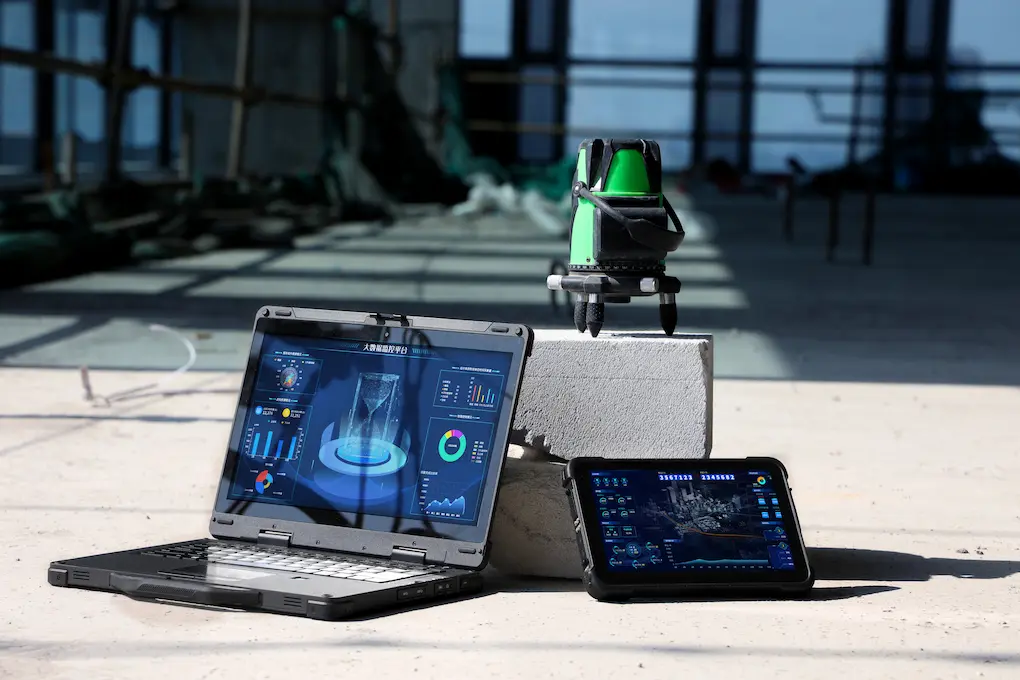
1. Certified Ruggedness: Beyond the Protective Case
A good industrial tablet pc is not just a consumer tablet in a thick shell; it is a device engineered from the motherboard up for survivability.
MIL-STD-810G/H Compliance: This military-grade certification is the hallmark of a good industrial tablet pc. It ensures the hardware has survived rigorous testing for repeated drops onto concrete, intense mechanical vibrations, and rapid altitude changes.
High Ingress Protection (IP65/67): Absolute sealing against fine particulate matter and pressurized liquids is mandatory. Whether operating in a dusty woodshop or an outdoor rainy dock, a premium device maintains internal integrity without the risk of short-circuiting.
(4) In addition, due to the diversity of ready-made environments, including high temperature, high humidity, vibration, dust, and some unexpected environments and use conditions, with comprehensive considerations, we have also put forward higher requirements for the use of industrial tablet PCs.
(5) The industrial tablet PCs should also consider expansibility and ease of maintenance, as well as design experience and quality management in many aspects.
2. What characteristics should the design of industrial tablet PC meet?
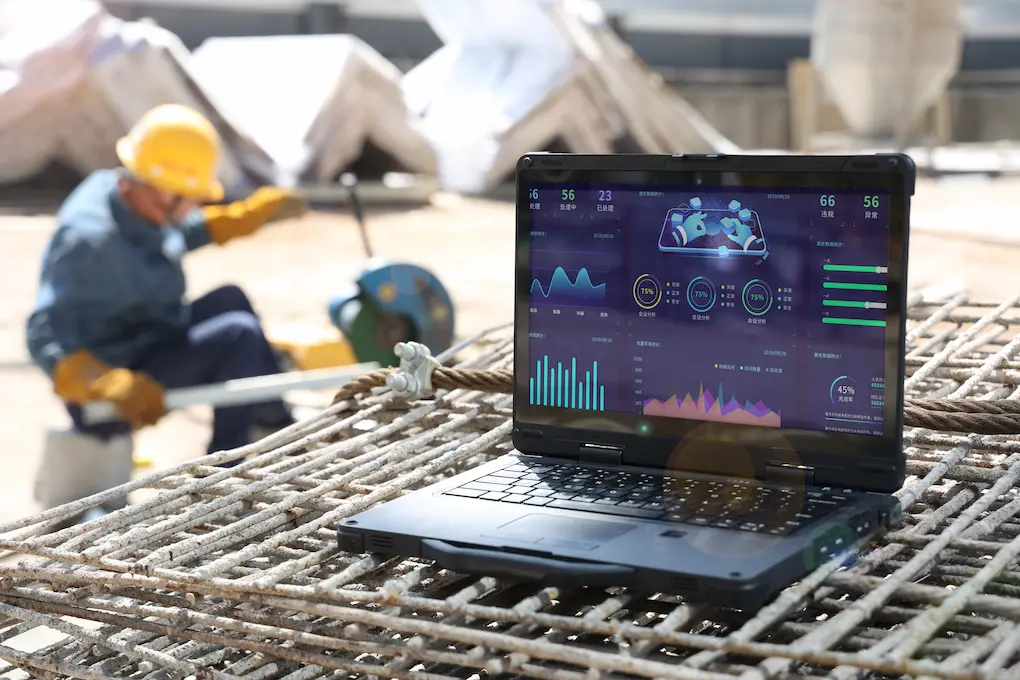
Advanced Visuals and Responsive Touch Interface
Operational efficiency on the frontline relies heavily on screen readability. A good industrial tablet pc must feature a sunlight-readable display with at least 800-1000 nits of brightness and anti-reflective optical bonding.
Furthermore, the touch interface must adapt to the worker. Premium ruggedized tablets support glove-touch and wet-hand operation, allowing mechanics and lab technicians to input data without removing their protective gear. This responsiveness, combined with chemically strengthened glass (like Corning Gorilla Glass), ensures the device is as tough as it is intelligent.
(1) First of all, all hardware must meet the parameters required by the industrial site, including the rigid indicators such as product’s comprehensive service life of more than 50,000 hours; working temperature of -20 to 60 degrees; relative temperature of 10~95%@40°C (non-condensing); vibration of 50~500Hz, 1.5G, 0.15mm peak.
(2) Combining the complexity of the on-site environment and usage methods, higher requirements are put forward for the power supply and interface of the industrial tablet PCs. The power supply should use a wide-voltage power supply to buffer and filter the power supply. The interface should be onboard, and there should be no missing connections, which may affect on-site communication, let alone lose data.
(3) For industrial tablet PCs, the most important thing is that the heat dissipation of the whole machine must be done well to ensure the operating environment of the mainboard and various components. Too high temperature directly causes the stability and service life of the computer to plummet. Most of the tablet PCs adopt the method of passive and fin-type heat dissipation, so there must be a reasonable design and a large enough surface area for the heat dissipation box.
(4) Good components are not enough, but a good design structure is needed. In addition, it is also very important for manufacturers to ensure the production life cycle of the industrial product. Good products contain many unseen stories and hard work.
3. Industrial-Grade Components and Fanless Reliability
Internally, a good industrial tablet pc utilizes fanless passive cooling systems. By eliminating mechanical fans, the device removes a primary point of failure and prevents the ingestion of conductive factory dust.
Inside the chassis, look for industrial-grade electronic components and high-speed storage (NVMe SSDs) that can handle the heavy data loads of MES or ERP systems. Combined with hot-swappable batteries, a premium device ensures 24/7 continuous operation, allowing your workforce to swap power on the fly without ever shutting down critical applications.
Is your mobile workforce equipped with hardware that meets these elite standards? Explore Emdoor’s full range of high-performance rugged tablets, and discover what truly makes a good industrial tablet pc the backbone of a successful digital transformation.