
The evolution of enterprise mobility is accelerating. As smart manufacturing, field logistics, and public safety undergo rapid digital transformation, traditional mobile hardware is struggling to keep pace. So, what defines the future of rugged tablets? It is no longer just about surviving drops and dust; the next generation of industrial devices is transitioning into highly intelligent, customized, and seamlessly integrated mobile command centers. For IT decision-makers looking to future-proof their operations, understanding these emerging hardware trends is critical.
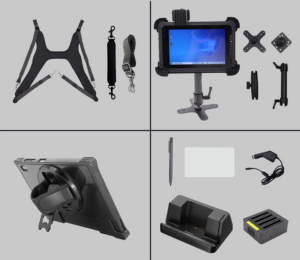
Industrial tablet PCs are actually what everyone calls tablet PCs, but because of their relatively high requirements, they are also called military rugged tablet PCs. Military rugged tablet PCs need to meet many requirements, such as adapting to harsh environments and high protection. Rugged tablet computers were originally developed from computers. However, with the continuous development of technology today, further improvements have been made. Then in the future, in which direction will the rugged tablet computers develop?
1. Highly Customized and Modular Designs
The era of “one-size-fits-all” hardware is over. The future of rugged tablets lies in extreme customization and modularity. Different industries demand unique functionalities—from integrated 3D cameras for logistics volume measurement to specialized RFID and fingerprint scanners for secure medical access. Moving forward, Original Design Manufacturers (ODMs) like Emdoor will increasingly offer modular tablet designs, allowing enterprises to swap specialized I/O ports and expansion modules seamlessly without re-purchasing the entire core device.
2. Miniaturization Without Compromising Power
Historically, achieving military-grade durability meant carrying a heavy, bulky device. Today, one of the most prominent trends shaping the future of rugged tablets is the push for ultra-mobility. As cooling technology and processor efficiency improve, manufacturers are condensing immense computing power into thinner, lighter chassis. This shift allows factory workers and field engineers to mount devices easily in confined spaces, such as forklift cabs or pipeline inspection points, maximizing spatial efficiency while maintaining IP67-rated durability.
3. The Integration of 5G, Edge Computing, and AI
Beyond physical design, the true technological leap is happening internally. The future of rugged tablets is inextricably linked to 5G connectivity and Edge Computing. Instead of relying solely on cloud servers, the next generation of rugged PCs will process massive datasets locally on the factory floor, significantly reducing latency for automated robotics and machinery control. Furthermore, embedded AI capabilities will enable these tablets to run predictive maintenance algorithms in real-time, instantly diagnosing equipment issues before they cause costly downtime.
The ruggedized computer can be said to be a small computer. After the product protection requirements are met, the next step is definitely the performance of the product. If the ruggedized tablet can catch up with products such as ruggedized notebooks in performance, I believe the future market must be a rugged tablet, so in the next few years, the focus of the development of rugged tablet computers must be the improvement of performance.
Ready to align your enterprise hardware with the next generation of industrial innovation? Explore Emdoor’s full range of forward-looking solutions and discover the future of rugged tablets today, ensuring your frontline workers are equipped with the most advanced, future-proof mobile technology.